Most digital projects miss their goal. The consulting firms agree on why.
McKinsey, BCG and Bain surveyed thousands of companies. Their numbers differ. Their conclusions don't.
Gli articoli sono disponibili solo in inglese.
If you are about to start a digital project, it's worth knowing the base rate. The largest consulting firms have surveyed thousands of companies about how often these projects deliver what they promised. The answers are sobering, and remarkably consistent.
How often projects hit their goal
BCG: 35% of digital transformations met their targets in 2021, 30% in 2020, across more than 850 companies (BCG, 2021).
McKinsey: 16% of transformations improved performance and sustained it, across 1,793 respondents (McKinsey, 2018).
McKinsey, value captured: companies realise on average 31% of the expected revenue gain and 25% of the expected savings (McKinsey, 2022).
Bain: 5% of digital transformations met or exceeded expectations, across more than 1,000 companies (Bain, 2018). In its change research, 12% of initiatives fully met their goals and 20% failed outright (Bain).
Large IT projects: on average 45% over budget and 56% less value than planned (McKinsey and Oxford).
These are surveys of executives, so they measure perception, not audited outcomes. But they come from different firms, different years and different samples, and they land in the same place: most projects deliver less than promised.
What the firms agree raises the odds
11% → 50%+
chance of exceeding expectations, without the right practices and with all of themMcKinsey
Each firm frames it differently. The substance overlaps.
A clear, measurable goal. A few themes tied to measurable outcomes raised the odds of exceeding expectations 1.7 times (McKinsey).
Short cycles. Agile practices added 15 percentage points (McKinsey). Small projects succeed 10 to 30 times more often than large ones (Standish CHAOS, 2015).
The right people from the start. When technologists take part in strategy from the beginning, success rates are 154% higher (BCG, 2024). User involvement tops the Standish list of success factors.
Behaviour, not just software. Around 65% of initiatives require employees to change how they work (Bain).
Clear requirements. Inaccurate requirements were the main cause of failure in 37% of projects (PMI).
BCG found that six success factors together moved the chance of success from 30% to 80%.
The size advantage
The same McKinsey research found that transformations in companies with fewer than 100 employees are 2.7 times more likely to succeed than in companies with more than 50,000. Fewer approvals, shorter chains, faster decisions. A mid-sized company that keeps projects small keeps that advantage.
Delay is a cost too
BCG estimates that a six-month delay can turn a tenfold return into a four- or fivefold one. Long projects don't just cost more. They deliver later, into a business that has already changed.
What this means in practice
None of this is specific to us. It applies to any project. We work this way by default because the evidence is this clear:
Research before code. We start with questions, because most clients know their pain and the result they want, not the name of the solution.
A pilot in days. On real work, with the people who will use it.
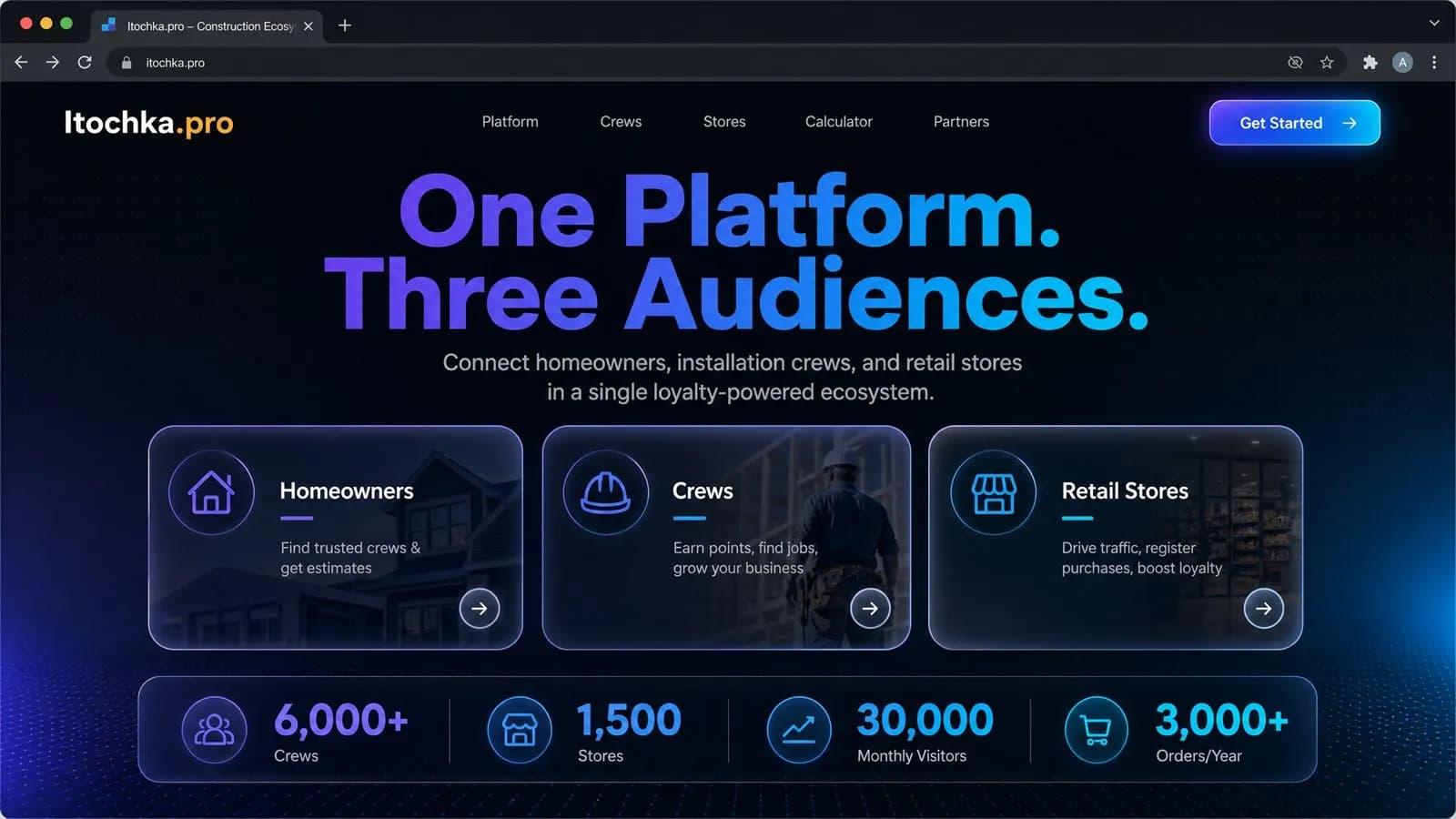
Stages with one hypothesis each. For Knauf Insulation, delivery ran as MVP, pilot, trial operation and production. Each stage tested one hypothesis before the next. See Three audiences. Nobody introduced them.
One number per stage. If it doesn't move, the plan changes before the next stage, not after the budget.
It depends on the definition. BCG found 30 to 35% met their targets. McKinsey found 16% improved performance and sustained it. Bain found 5% met or exceeded expectations.
What makes digital projects succeed?+
The surveys agree on a short list: a clear measurable goal, short delivery cycles, the people who will use the system involved from the start, and visible priority from leadership.
Are smaller companies more likely to succeed?+
Yes. McKinsey found transformations in companies with fewer than 100 employees 2.7 times more likely to succeed than in companies with more than 50,000.
Dal portfolio
Knauf Insulation · Materiali da costruzione · Internazionale
6,000
professionisti e 1,500 punti vendita su un’unica piattaforma
Trenta minuti. Voi descrivete il problema e il risultato che volete. Noi facciamo domande. Se possiamo aiutarvi, ricevete una email con cosa abbiamo trovato, cosa costruiremmo e quanto costa. Se non possiamo, ve lo diciamo.