Fifteen minutes a call does not sound like much. Multiply it, then look at what your buyers would rather do.
Gli articoli sono disponibili solo in inglese.
Nobody in a manufacturing company thinks of a phone order as a cost. It's just a call. A customer rings, a salesperson writes it down, someone types it into the ERP, someone checks the price, someone confirms by email. Fifteen minutes, maybe twenty.
Multiply it.
The arithmetic
Take a company that handles 25 repeat orders a week by phone, email or WhatsApp, at 15 minutes each, all in.
The full cost of an hour of work in euro-area industry was €40.30 in 2025 (Eurostat).
325 hours × €40.30 ≈ €13,000 a year.
That figure excludes the order typed with the wrong item code, the price quoted from last year's list and the order taken at 8 pm because the customer only had time then. It excludes the cost to the customer, who also spent those fifteen minutes.
For one order type, at one company, it is not dramatic. For most manufacturers it is the floor, not the ceiling.
What your buyers would rather do
B2B buyers have changed faster than most sales processes.
61%
of B2B buyers prefer a buying experience without a sales repGartner, 2025
Buyers now use around ten channels during a purchase, against five in 2016 (McKinsey B2B Pulse).
At B2B companies that offer e-commerce, it brings in 34% of revenue on average (McKinsey, 2024).
In Western Europe, up to 40% of B2B orders are placed online (McKinsey).
In Italy, only 14.7% of companies with ten or more employees sell online (Istat, 2025). Across the EU, online sales account for 19% of turnover (Eurostat, 2026).
The gap between what buyers prefer and what many manufacturers offer is the opportunity.
Which orders should stay with a person
This is not an argument for removing salespeople. The same research is clear about where people matter.
When choosing a new supplier, 41% of buyers prefer to meet in person (McKinsey, 2024).
Buyers who use the supplier's digital tools together with a salesperson are 1.8 times more likely to complete a high-quality deal than those who go it alone (Gartner).
69% of buyers notice inconsistencies between what the website says and what the salesperson says (Gartner, 2025).
The split that works: repeat orders, reorders and stock checks go online. New customers, custom configurations and disputes stay with a person, who now has the time for them.
The dealer question
38% of companies don't sell online because of channel conflict: they are afraid of competing with their own dealers (McKinsey). The fear is reasonable. The answer is to build the portal for the dealers, not around them.
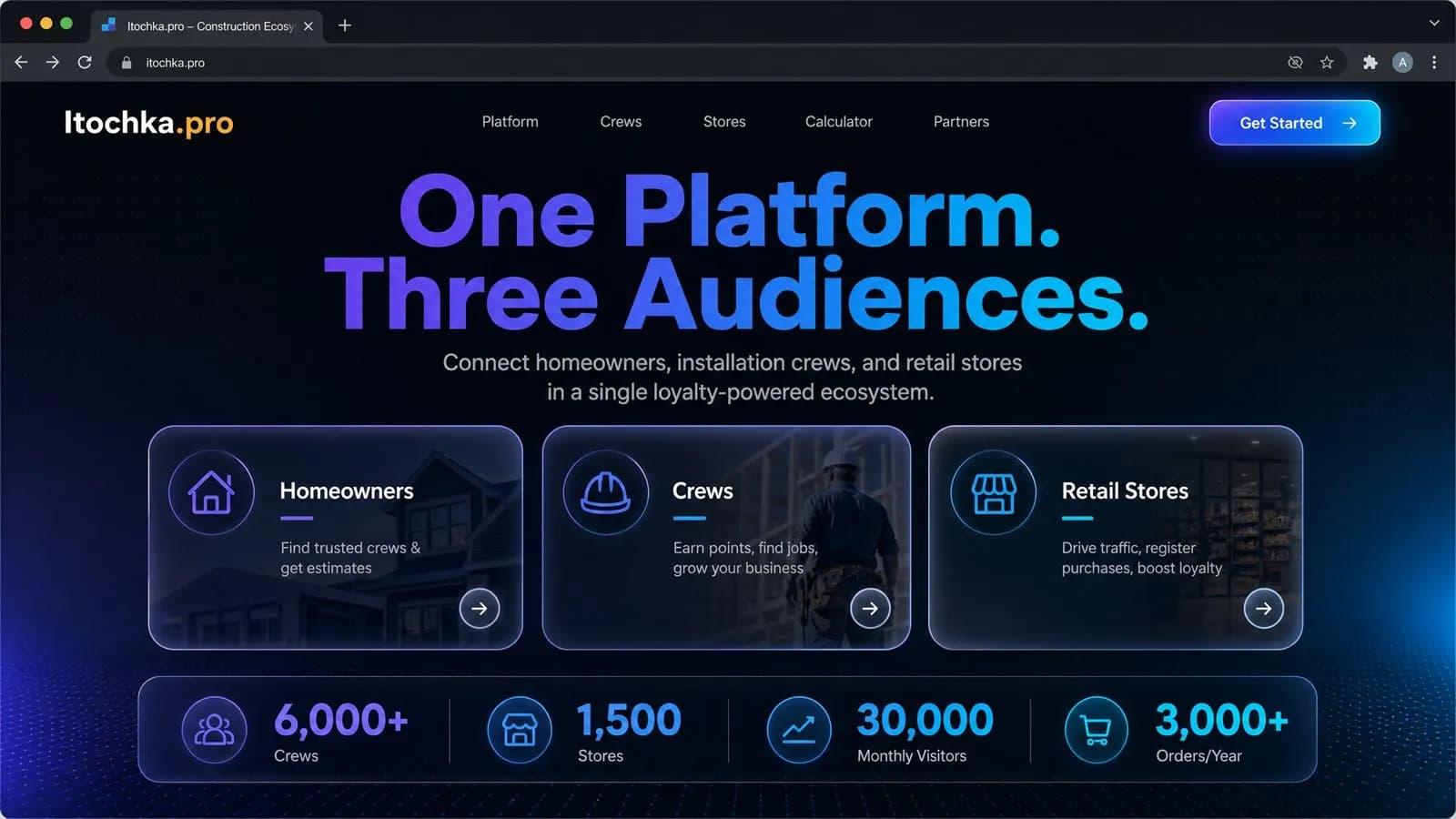
When we built Itochka.pro for Knauf Insulation, retailers were part of the platform from the start. They publish their store information, price lists and product range, and appear on a map so a homeowner can find the nearest outlet. 1,500 stores registered, and 70% of them actively record purchases. The full story is in Three audiences. Nobody introduced them.
Where to start
Count one week of orders by channel: phone, email, WhatsApp, in person.
Time ten of them from first message to confirmed ERP entry.
Mark which ones a customer could have placed alone if they had the current price and stock.
Ask three regular customers how they would prefer to reorder.
That is a day of work, and it tells you whether a portal pays for itself before you spend anything on one.
Multiply the orders a week by the minutes each one takes, including retyping and checking, by 52 weeks and by your full hourly labour cost. Eurostat publishes that hourly cost for each EU country.
Do B2B buyers really want to order online?+
Most do for repeat orders. Gartner found that 61% of B2B buyers prefer a buying experience without a sales rep. For a new supplier, many still want a person: 41% prefer an in-person meeting at that stage, according to McKinsey.
Will a portal upset our dealers?+
It can, if it competes with them. McKinsey found that 38% of companies don't sell online because of channel conflict. A portal built for dealers, with their prices and their customers, works with the channel instead of around it.
Dal portfolio
Knauf Insulation · Materiali da costruzione · Internazionale
6,000
professionisti e 1,500 punti vendita su un’unica piattaforma
Trenta minuti. Voi descrivete il problema e il risultato che volete. Noi facciamo domande. Se possiamo aiutarvi, ricevete una email con cosa abbiamo trovato, cosa costruiremmo e quanto costa. Se non possiamo, ve lo diciamo.