
Fabrico · Sewing patterns, website · International · 2026
Keep WordPress. Lose the wait.
- Timeline
- 2 days
- Market
- International
3×
faster pages, with the same WordPress behind them
What was missing
Fabrico sells downloadable sewing patterns. The shop runs on WordPress: WooCommerce for products and orders, Elementor for pages, Yoast for search, Stripe for payments, a video-course plugin and about twenty more. Over the years it had grown into exactly what it looked like from the outside: a site that worked, sold, and was slow.
The home page and the catalogue took about 1.7 seconds just to start responding. The home page alone sent 245 KB of markup before a single image. Every visit made the server rebuild the page from scratch, plugin by plugin. Changing the design meant going back into Elementor, where every change was slow and broke something else.
The team wanted a faster, more modern site. What they didn't want was to lose what already worked.
The insight
The usual answer to a slow WordPress site is a migration. You pick a new platform, rebuild the shop, move 240 products and their variations, re-create checkout, accounts, video courses and tracking, then hope years of search rankings survive the move. That's months of work, and the shop has to keep selling the whole time.
When we looked closer, WordPress wasn't the problem as a back office. Products, posts, orders and payments already lived there, and the team knew the admin by heart. The problem was the other job WordPress was doing: building every page, for every visitor, on every visit.
So we didn't replace WordPress. We took that one job away from it.
What we built
A new front, built from WordPress
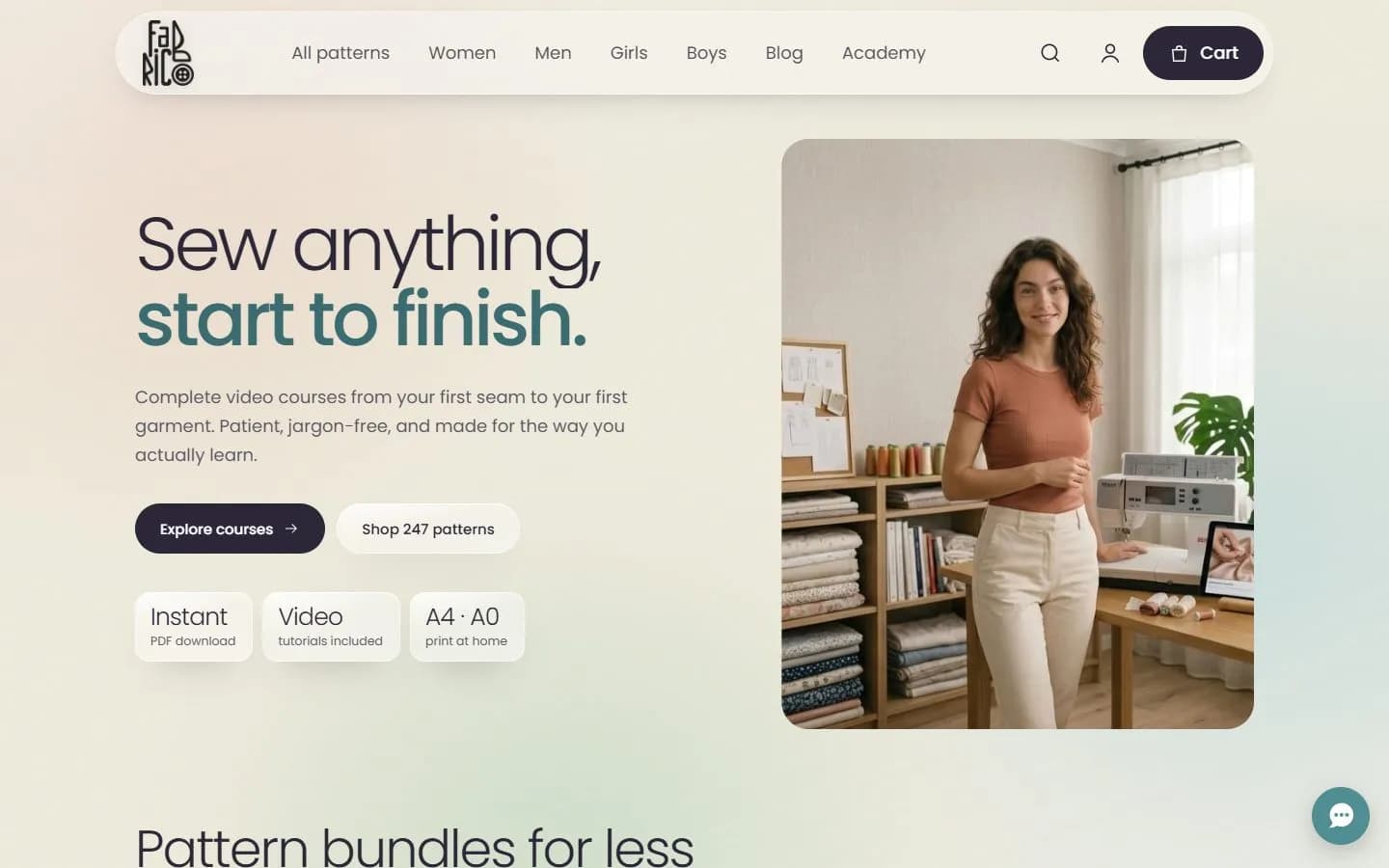
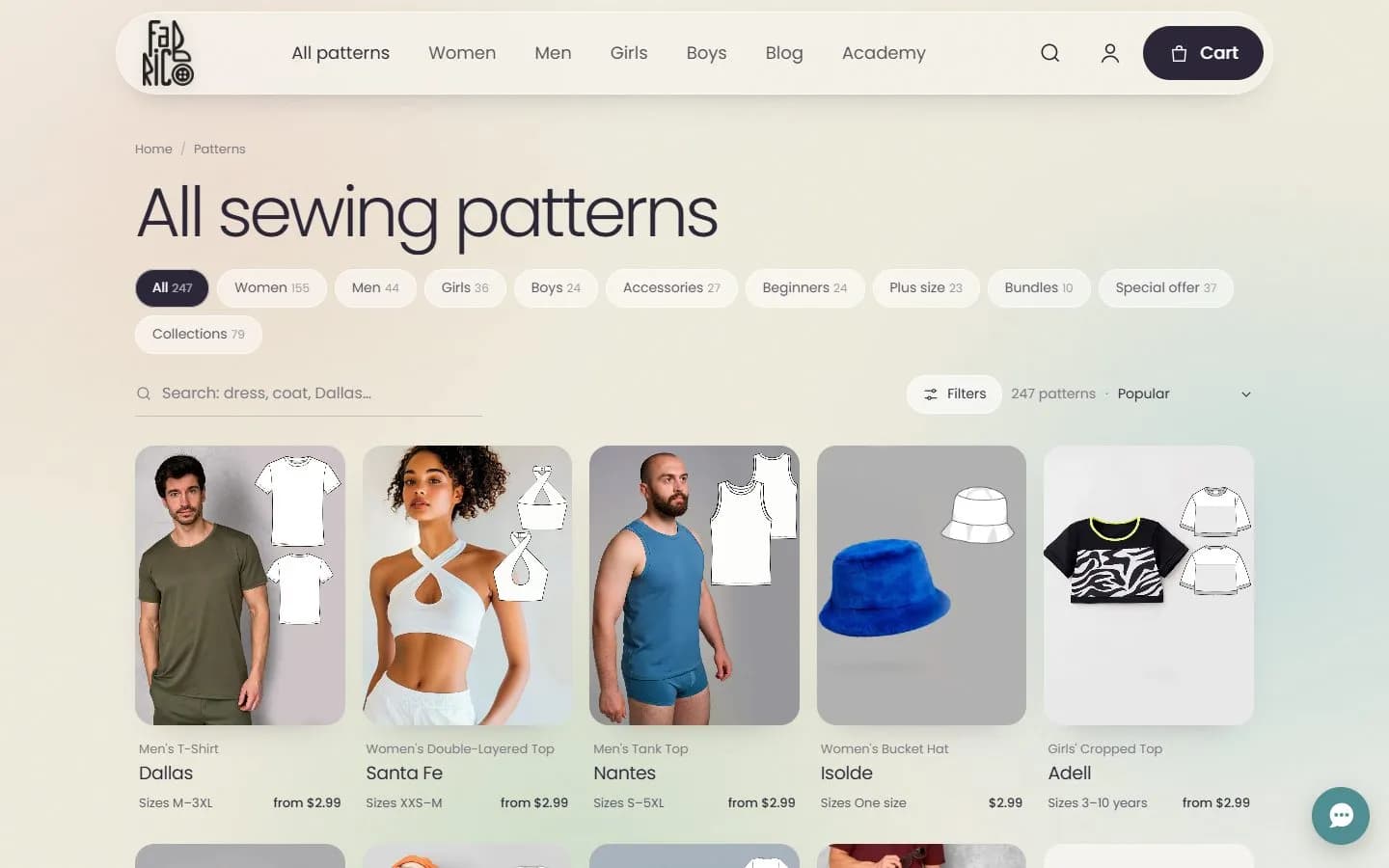
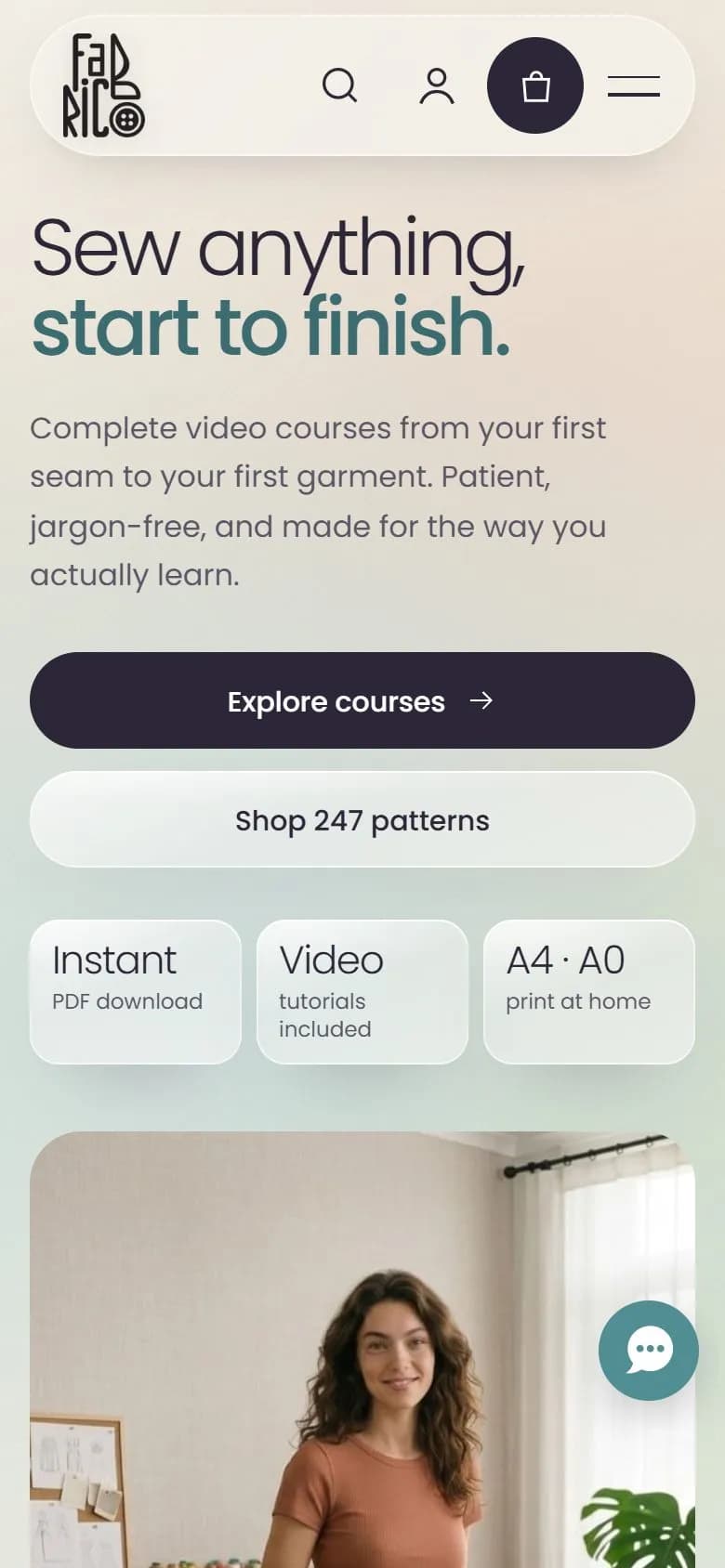
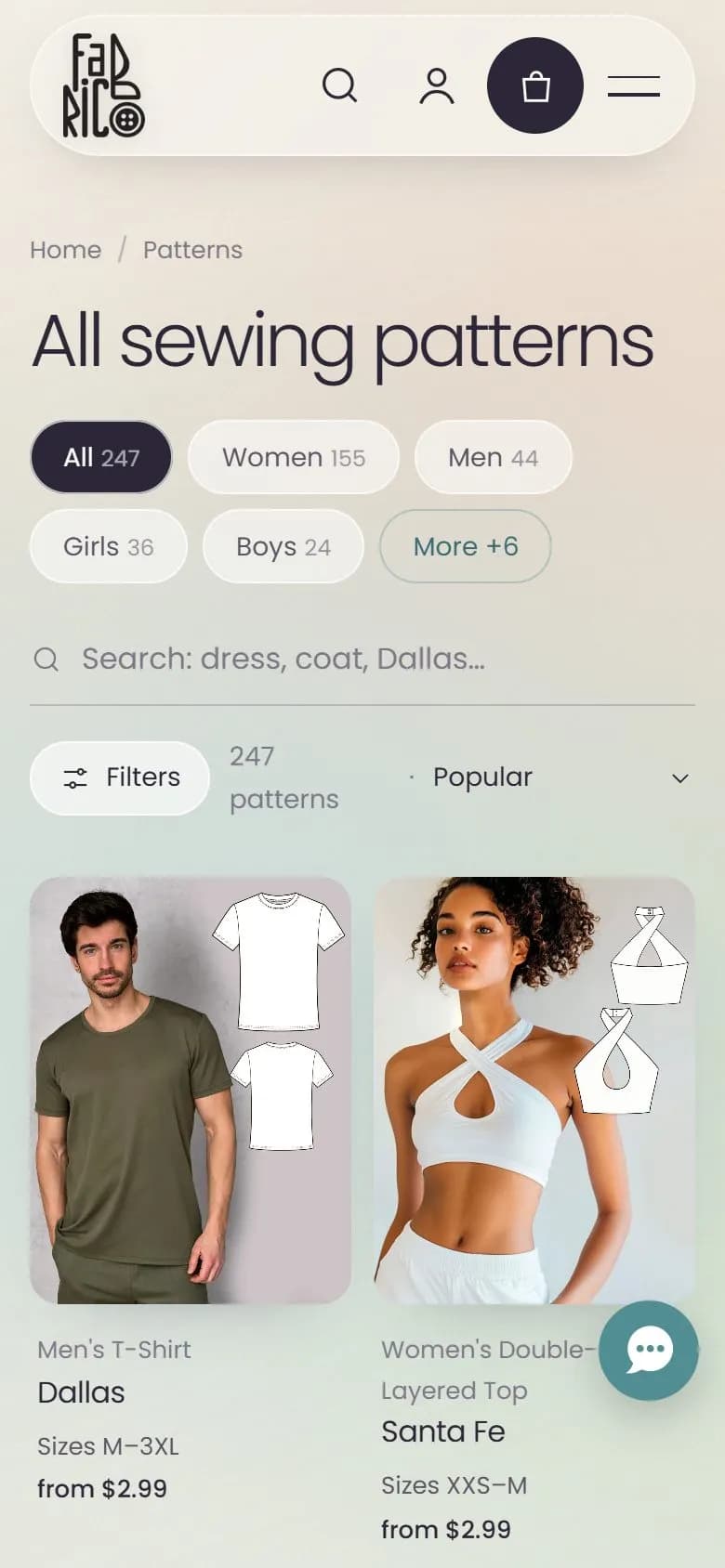
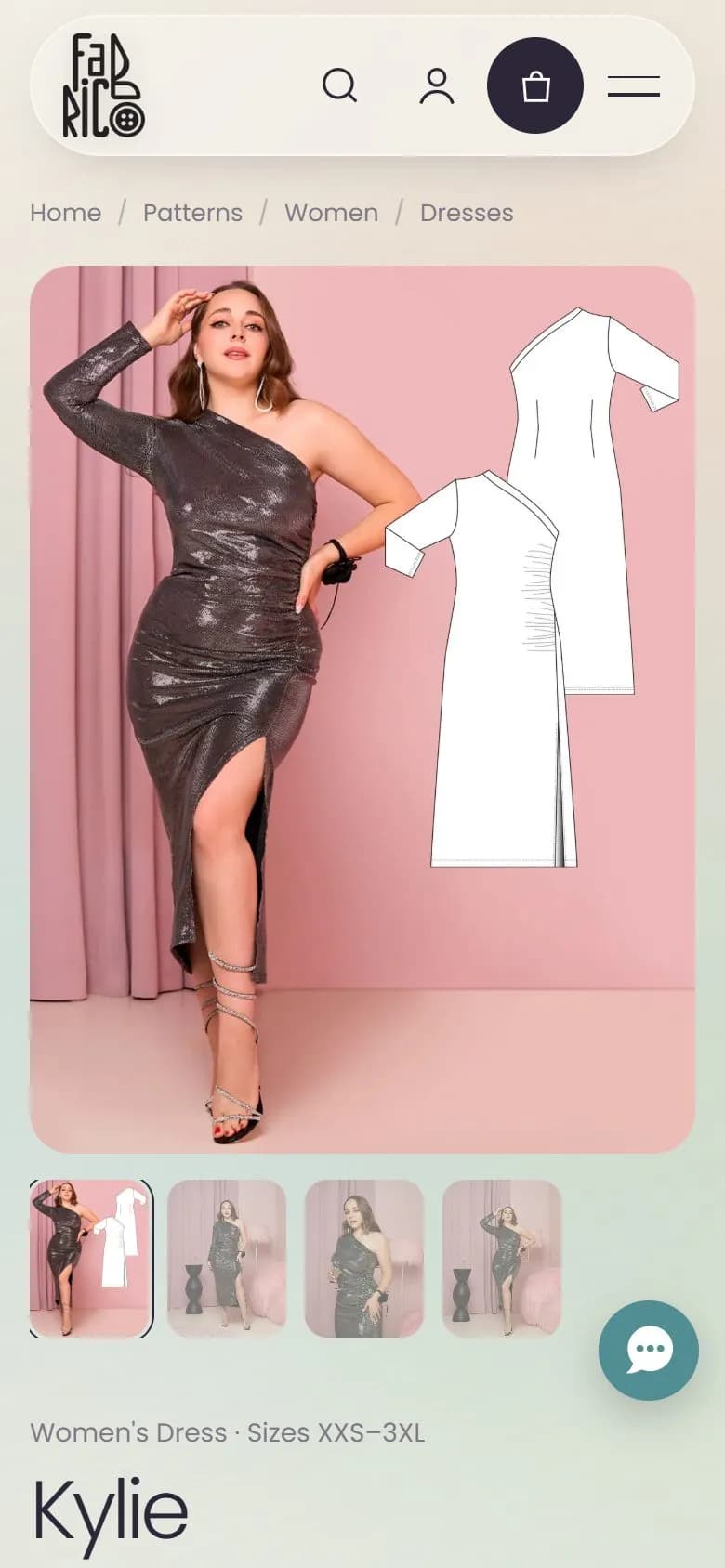
Every public page of the site (home, catalogue, 240 products, 60 categories, 322 blog posts and all the info pages) is now built in advance from WordPress data and served as a ready-made page. The addresses didn't change. The design did: a new design system in Fabrico's own colours and font, with glass panels, smooth scrolling and pinned scenes on the home page.
The hardest part was Elementor. Its pages are layouts, not content. We wrote a converter that reads each Elementor page, pulls out the meaning (headings, text, images, buttons, FAQs) and rebuilds it in the new design. Product photos are converted to modern formats in two sizes, so phones don't download desktop images.
A catalogue that answers instantly
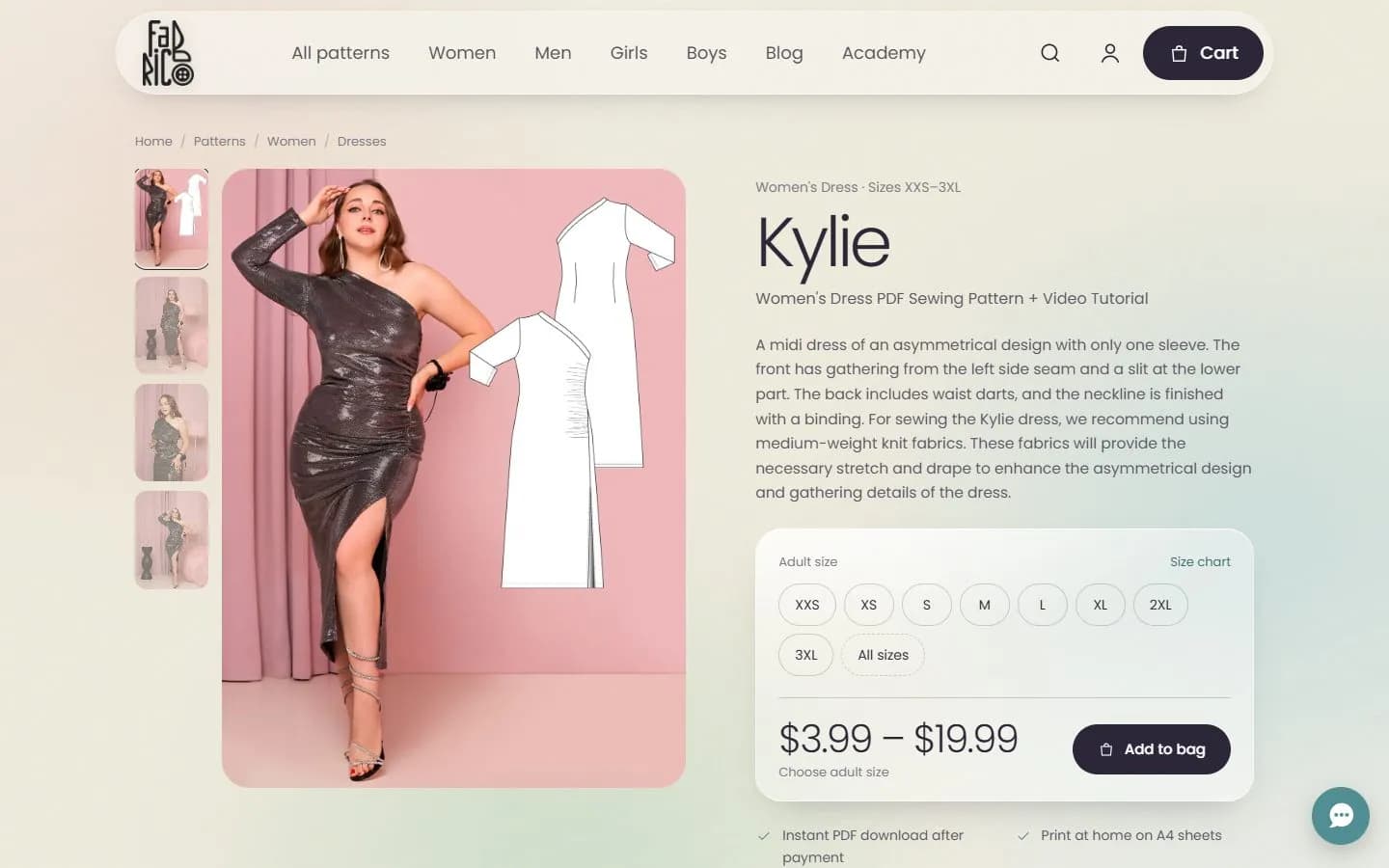
Search, categories, sorting and filters by size, skill level, season, fabric, figure and sleeve all work in the browser, with no waiting for the server. On the product page the size and height picker is built from the real product variations, and the price updates as you choose.
The same cart, the same orders
The cart is a new slide-out panel, but underneath it is WooCommerce's own cart. It is literally the same cart WordPress sees. A customer adds a pattern on the new front, pays on WordPress, and never notices the hand-off.
Accounts, order history, downloads and video courses also work on the new front, through WordPress. Lesson videos are released only after the server confirms the purchase.
Checkout stays where it's safe
Stripe with six payment methods and 3-D Secure is not something you rewrite to get a new look. So checkout stays on WordPress, and we dress it in the new design on the way to the customer: the same header, footer and styles, added on the fly. From the home page to the receipt, it looks and feels like one site.
Nothing lost in search or analytics
Titles, descriptions, canonical links and structured data were copied from Yoast for 704 pages, and old redirects were traced to their final addresses. Google Tag Manager, Yandex Metrica, Pinterest and the Meta pixel (views, add-to-cart, checkout, purchase) fire exactly as before.
It updates itself
The team still works in the same WordPress admin. Every night the new front reads the fresh data from WordPress, rebuilds itself in about two minutes and removes pages that were deleted. Safeguards make sure a bad night can't empty the site. A new product or blog post simply appears the next morning.
How we worked
Traffic is split at the edge, in front of both servers. The new front serves the pages; WordPress keeps its admin, its API and anything the new front doesn't have, so a missing page falls back to WordPress instead of an error.
We launched for a test group first, made a real purchase end to end (paid, order created, the customer's real IP kept for fraud checks) and only then opened it to everyone. One setting brings the old site back.
More than 230 automated checks cover pages, menus, prices against the shop, the buying path, the cart on desktop and phone, accounts and courses. They run before every update goes live.
Results
3× faster first response: 0.5 seconds instead of 1.7. 6× less HTML per page. About 650 pages on the new front, at the same addresses. 2 days from the first page to launch for every visitor, and a week until it ran itself every night. Nothing migrated, and nothing changed for the people who run the shop.
Why this holds
Most WordPress sites that feel slow or dated don't need a new platform. They need a new front. The products, the content, the order history and the habits of the people who run the site are the expensive part, and they can stay exactly where they are.
That's what makes this approach repeatable. It works for a WooCommerce shop, a blog with hundreds of posts, or a company site built in Elementor that nobody dares to touch any more. WordPress keeps doing what it's good at. Visitors get a site that feels new.
What the work included
Website front-end development, design system, WordPress and WooCommerce integration, performance, SEO migration, analytics, hosting and nightly updates
Stack
Tell us what's missing.
Thirty minutes. You describe the pain and the result you want. We ask questions. If we can help, you get one email with what we found, what we'd build and what it costs. If we can't, we'll say so.