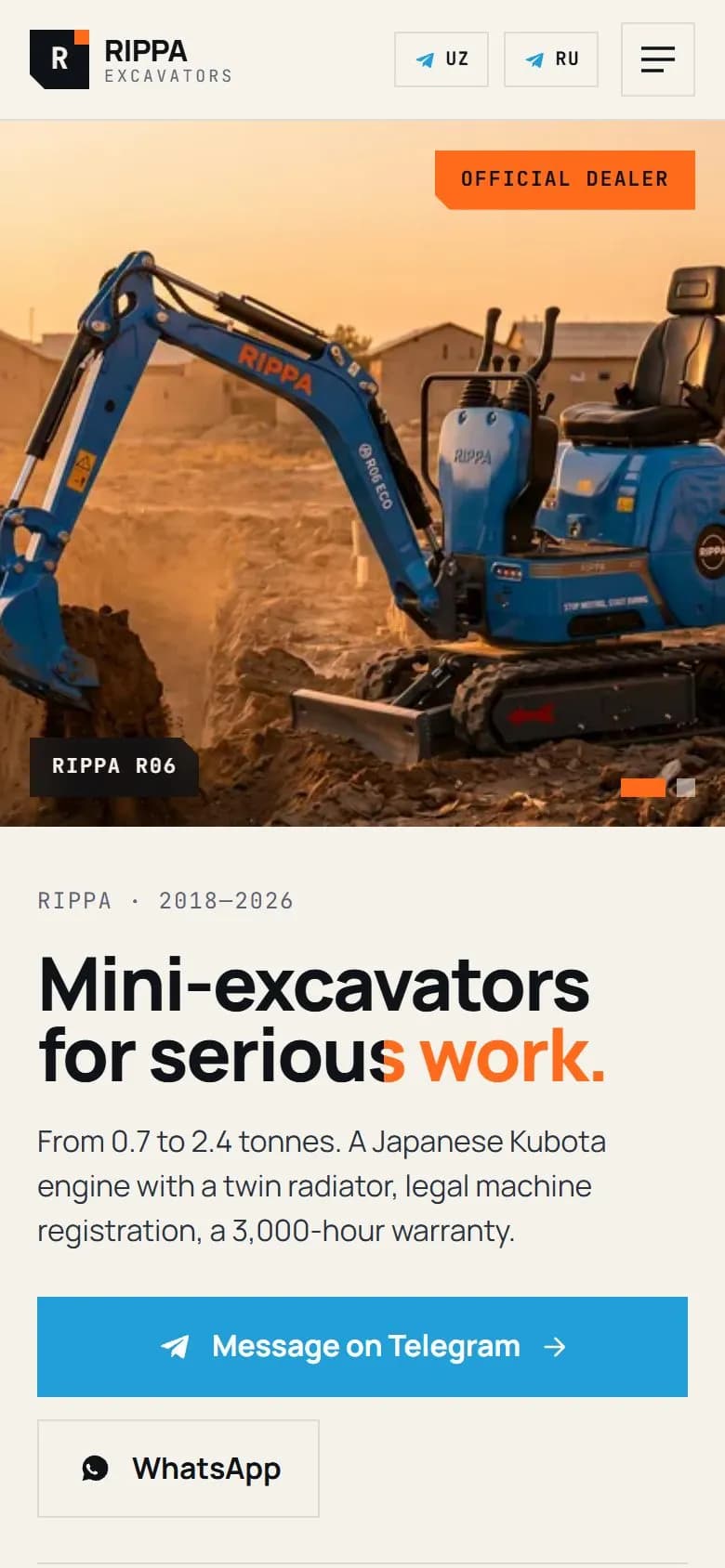
Rippa · Mini-excavators, dealer storefront · Central Asia
57,494
owner messages turned into 60 articles buyers trust
Nobody trusts a dealer's brochure. They trust other owners.
5–6 weeks
More salesShape the market

Shape the market
Dealers don't resist portals. They resist anything slower than a message. A migration plan in five steps.
Ask a manufacturer how its dealers order and the honest answer is often: "WhatsApp, phone, and a PDF price list from last year." Ask why the dealer portal isn't used, if there is one, and you hear that dealers are old-fashioned.
They aren't. They are busy. A message takes ten seconds. A portal that takes three minutes, asks for a login they forgot and shows a price they don't trust will lose to the message every time.
Before replacing a channel, it's worth being clear about why people chose it.
A portal that ignores these loses. A portal that keeps them and fixes the rest wins.
1. Start with the most frequent order, not the full catalogue. Find the five products each dealer orders most and make reordering them faster than typing a message. One screen, current price, one button.
2. Show stock and lead time as facts. For Rippa, a dealer of mini-excavators, we listed parts and consumables explicitly: what is in stock today and what comes from China in one to three weeks. A buyer planning a job needs that before they order, not after. See Nobody trusts a dealer's brochure.
3. Keep the person one tap away. Every page on the Rippa storefront has one-tap contact by Telegram, WhatsApp and phone. The portal does not replace the conversation. It removes the routine part of it.
4. Give dealers something they can't get by message. Their order history, their invoices, current marketing material, and leads. When we built Itochka.pro for Knauf Insulation, retailers appeared on a map so homeowners could find them, and construction calculators turned a homeowner's saved estimate into a direct contact with a nearby store.
5. Measure use, not logins. The useful number is the share of dealers actively recording purchases. On Itochka.pro, 70% of the 1,500 registered stores do.
70%
38% of companies don't sell online because they fear competing with their own dealers (McKinsey). If the portal sells to end customers behind the dealer's back, the fear is justified.
The alternative is to build the platform for the whole market. Homeowners look for a reliable professional and a convenient store. Professionals look for clients and better terms. Retailers look for traffic. A manufacturer that connects them gives each a reason to use the system, and becomes the place the market does business.
The evidence that this pays: companies that built their own marketplace increased market share in 72% of cases, against 42% of the rest (McKinsey, 2022). Cemex, the building materials company, now runs 65% of its sales through its own digital platform for construction customers (MIT CISR, 2025).
Professional contractors still buy mostly in store: 91% buy offline, against 29% who order online for delivery (HIRI, 2023). Only one in ten large companies earns 5% or more of revenue from its ecosystems (McKinsey). A portal is not a strategy on its own. It works when it gives each participant something they need from the others.
Cost calculator
Related: What a phone order really costs a manufacturer · Your loyalty programme is not why contractors buy from you
Rippa · Mini-excavators, dealer storefront · Central Asia
57,494
owner messages turned into 60 articles buyers trust
5–6 weeks
Be where your market meets.
Thirty minutes. You describe the pain and the result you want. We ask questions. If we can help, you get one email with what we found, what we'd build and what it costs. If we can't, we'll say so.